
Outbound Appointment Setters: Medicare Telehealth Cancellations

Table of Contents

Medicare Telehealth 2026: Outbound Appointment Setters Protect Volume & Access

If Medicare telehealth in 2026 feels like a daily fire drill, outbound appointment setters are the missing lane. Many practices are finding that relying solely on inbound workflows leaves too much to chance—cancellations spike, follow-up appointments slip, and staff gets dragged into constant tech support.

That’s why outbound appointment setting has become a practical, high-impact lane for clinics that want telehealth to run like a system. When outbound appointment setters own conversion and readiness, more appointments get protected, more patients show up prepared, and your team stops spending the day in phone tag.

Medical Staff Relief fixes this fast by installing a telehealth-ready outbound appointment setting lane in 7–14 days—powered by a trained remote team that helps schedule appointments, confirms readiness, sends reminders, and rescues failed joins before they become no-shows. The outcome is simple: more appointments set, fewer collapses, and a calmer clinic day that feels sustainable.

Why Medicare telehealth operations are trending in 2026

Telehealth isn’t “temporary” anymore—it’s an operating system that your practice is expected to run reliably. With Medicare telehealth flexibilities extended into 2027, the question is no longer “Should we do telehealth?” It’s: “Can we run telehealth without bleeding time, access, and revenue?”

Clinics that treat telehealth as a repeatable appointment setting process protect access and stabilize visit volume. Clinics that don’t often face the same pattern: last-minute cancellations, rescheduled follow-ups weeks out, and staff overload from troubleshooting.

Not a clinical issue—it’s conversion/readiness. With CRM systems and automated dialers plus communication skills and persistence, appointment setters can focus, identify what works best, drive successful outbound, play a crucial role, and lead to better completed visits.

The hidden failure mode: telehealth breaks before the visit starts

Telehealth rarely fails because the clinician can’t deliver care virtually. It fails because patients:

two women having a hard time– never received (or can’t find) the link

– don’t know which device to use

– can’t enable camera/mic


– don’t have meds/vitals ready


– hit one tech snag and give up

– cancel last-minute and disappear for weeks

Outreach—not medicine. It’s a sales team follow-up: building trust with prospects, securing appointments with prospects, and clarifying needs and pain points. As future trends shift, refine your approach so appointment setters can focus—even when appointment setters often face friction.

Common Telehealth Breakdowns (and the Fast Fix)

Breakdown #1: “Link Lost” and Patients Give Up

When patients can’t find the link or don’t know what to click, they often abandon the visit instead of calling back—turning a simple follow-up into a no-show. Outbound appointment setters prevent this by confirming the best delivery method (text/email), resending links proactively, and using a clear and concise script to set expectations. This is one of the most common pain points that leads to fewer appointments set and more reschedules.

Breakdown #2: Staff Becomes Tech Support

Telehealth collapses when your front desk and clinical team spend the day troubleshooting audio/video instead of running intake, scheduling, and patient service—turning them into telephone support instead of the team to focus on care. The issue isn’t effort—it’s time management and misplaced ownership, and it breaks the sales process of access from inbound appointment setting to a good appointment that actually happens.

Appointment setters must personalize to build trust with prospects, schedule meetings, and land a good appointment—inbound appointment setting, account-based marketing, building relationships.

Outbound Appointment Setting for Medicare Telehealth Patients

two girls discussing what to doHow outbound appointment setters identify telehealth-appropriate visit types

Outbound appointment setters follow defined clinical criteria to determine which appointments can be safely converted to telehealth—typically follow-ups, medication management, lab review, and stable chronic care touchpoints. This reduces variability and ensures the appointment setting process supports clinical appropriateness, not convenience alone.

Once visit types are standardized, the team applies a consistent outreach workflow to convert eligible in-person visits to telehealth. That consistency improves access and decreases unnecessary rescheduling, while protecting provider time.

Standardized readiness checks that reduce failed joins and no-shows

A brief readiness check can prevent the most common telehealth breakdowns before they happen. Appointment setters confirm link delivery method, device choice, audio/video permissions, and whether the patient has key items available (med list, vitals if applicable, questions for the clinician).

This reduces failed-join rates and minimizes day-of troubleshooting for front-desk and clinical staff. The goal is operational stability: fewer interruptions, fewer repeat calls, and better continuity of care—while still supporting effective appointment setting that helps every patient reach a successful appointment through a personalize-first approach (borrowed from high-performing sales team workflows used with potential customers and potential clients adopting a new product or service.
The fix: outbound appointment setters as the “conversion + readiness” lane

Outbound appointment setting involves reaching out to potential patients (or existing patients eligible for virtual follow-ups) and guiding them into a successful telehealth visit. Think of it as an access lane that keeps appointments from falling through the cracks.

When appointment setters own telehealth conversion and readiness, you stop relying on luck and last-minute heroics. You build a lane that protects the schedule and strengthens continuity.

Medical Staff Relief Services

What we provide

Reducing No-Shows With a Telehealth-Ready Outreach Lane

Protecting visit volume by converting eligible appointments before they cancel

Most practices don’t have an access problem—they have a conversion problem. When patients are left to self-navigate telehealth, cancellations rise and appointments set don’t reliably turn into completed visits.

Outbound appointment setters proactively schedule appointments into a telehealth pathway that patients can actually complete. That protects visit volume, stabilizes the day, and reduces the revenue swings that come from preventable no-shows.

Same-day rescue that saves revenue and keeps the schedule from collapsing

When a patient doesn’t join, every minute matters. A same-day save workflow triggers immediate follow-up—call or text, resend the link, troubleshoot the basic issues, and get the patient into the visit while the provider is still available.

If video fails, the team follows predefined rules to pivot quickly (phone if allowed) or reschedule into the next best slot. This prevents “lost visits,” reduces phone tag, and keeps provider schedules tight instead of chaotic.

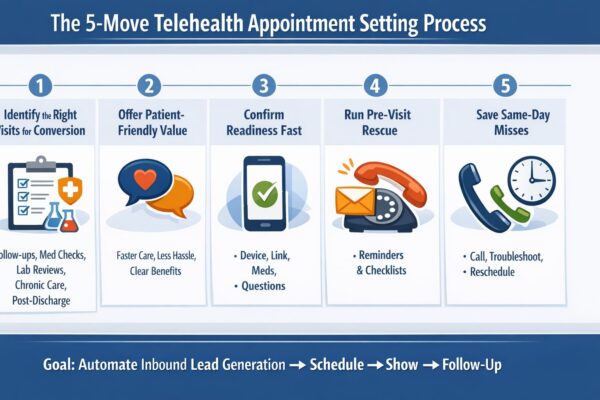
The 5-Move Telehealth Appointment Setting Process

5-Move Telehealth Appointment Setting Process1. Identify the right visits for conversion
Follow-ups, med checks, lab reviews, stable chronic care, post-discharge (as appropriate). This helps the team analyze what works best and apply consistent best practices.

2. Offer telehealth with a patient-friendly value proposition
Clear messaging matters. This is where communication skills are vital: explain why the virtual option helps them access care faster, with less hassle.

3. Confirm readiness in under a minute
Device + link delivery + connection basics + pharmacy + meds/vitals + questions. This is the streamlined process that turns “best-effort” into repeatable execution.

4. Run pre-visit rescue outreach
A likely-to-fail list prevents avoidable issues. A call or email reminder—plus a short checklist—reduces failed joins and day-of cancellations.

5. Save same-day misses fast
If a patient doesn’t join, appointment setters call within minutes, troubleshoot, switch to phone if allowed, or reschedule immediately so the appointment doesn’t vanish from the sales funnel of care access (and yes—healthcare has a funnel too: outreach → schedule → show → follow-up).

Goal: automate inbound lead generation so every prospect—potential clients, potential customers—joins.
What practices gain when outbound appointment setters run telehealth ops

Leaders feel these results quickly:

fewer day-of cancellations

– fewer failed video visits

– improved visit volume stability

– tighter follow-up intervals (better continuity)

– less staff burnout from tech support and constant follow-up

– more predictable provider schedules

– higher conversion from eligible in-person to telehealth

In the world of outbound appointment setting, results over time come from persistence, consistent follow-up, and a workflow designed to remove friction—because the goal is to create a dependable access lane. Outbound appointment setters play a vital role in protecting visit volume by focusing on understanding customer needs, guiding patients into meetings with potential providers, and reducing drop-off that leads to higher completion rates. This work can make all the difference day to day, and it may have a role in shaping future telehealth operations as virtual care continues to play a significant role in how practices expand access.

What to track so this doesn’t become “invisible chaos”

Weekly metrics that show whether your outbound appointment setting lane is working:

– telehealth conversion rate (eligible in-person → telehealth)

– no-show rate (telehealth vs in-person)

– failed-join rate + “saved visit” rate

– time-to-fill cancellations

– repeat-call rate from telehealth patients

These analytics make the workflow measurable, not emotional.

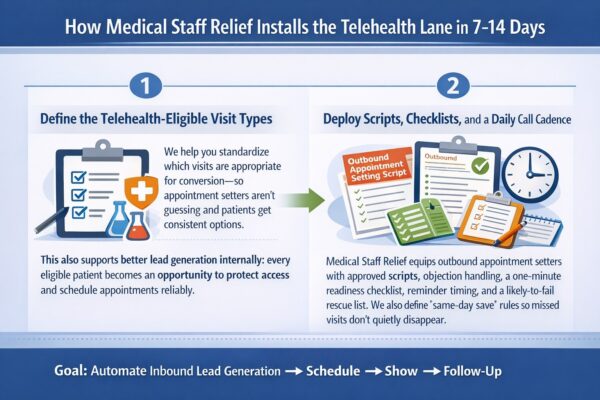
How Medical Staff Relief Installs the Telehealth Lane in 7–14 Days

Installs the Telehealth Lane in 7–14 Days

Step 1: Define the Telehealth-Eligible Visit Types

We help you standardize which visits are appropriate for conversion—so appointment setters aren’t guessing and patients get consistent options. This also supports better lead generation internally: every eligible patient becomes an opportunity to protect access and schedule appointments reliably.

Step 2: Deploy Scripts, Checklists, and a Daily Call Cadence

Medical Staff Relief equips outbound appointment setters with approved scripts, objection handling, a one-minute readiness checklist, reminder timing, and a likely-to-fail rescue list. We also define “same-day save” rules so missed visits don’t quietly disappear.

This approach ensures telehealth stays part of the process; rejection is part, but solving their problems and needs and concerns is part of the job to elevate your game

The Medical Staff Relief approach (doctor-founded, team-powered)

Medical Staff Relief was built from real clinic pressure—Dr. Ricardo Abraham experienced the operational strain inside internal medicine and proved that a trained remote team can stabilize the day when workflows are clear.

We bring that same playbook to your practice: one defined outreach lane, documented scripts, consistent execution, and measurable outcomes—so your team can focus on care while appointment setters handle the appointment setting process end-to-end.

FAQ

1. What are outbound appointment setters in a medical practice?

Outbound appointment setters proactively call/text patients to schedule, confirm, and reschedule visits. In telehealth, they also handle link delivery and readiness checks.

2. How do outbound appointment setters reduce telehealth no-shows?

They confirm contact details, send the link, and run a quick readiness checklist (device, steps, what to prepare). They also do pre-visit reminders and same-day rescue calls if a patient doesn’t join.

3. Can outbound appointment setters convert in-person visits to telehealth safely?

Yes—when your clinic has clear eligibility rules and approved scripts. They offer telehealth for appropriate visit types like follow-ups, med checks, and lab reviews.

4. What do outbound appointment setters do when a patient can’t join a video visit?

They troubleshoot basics fast (link, device, audio/video permissions) and pivot to phone if allowed. If not, they reschedule immediately and confirm next steps.

5. How fast can a practice implement outbound appointment setters for telehealth workflows?

Fast—once your rules and scripts are defined. Many practices can launch within days, and fully stabilize the lane in 7–14 days with the right setup.

Conclusion

If Medicare telehealth in 2026 is draining your team, outbound appointment setters are the practical fix that turns virtual care from a cancellation machine into a reliable access lane. When someone owns conversion, readiness, reminders, and same-day rescue, your schedule stops collapsing—and your staff stops carrying the weight of every missed link and failed join.

Medical Staff Relief installs a telehealth outreach lane built on best practices in outbound appointment setting—so patients show up prepared, clinicians stay on time, and your team gets relief fast. Because at the end of the day, it’s about making telehealth feel predictable again—fewer no-shows, fewer repeat calls, and more appointments set that actually happen.

Contact Medical Staff Relief

Send a message

Name
Checkboxes

Get In Touch

Discover What We Can Do For You And Your Practice