
Online Review Management for Doctors That Won’t Backfire
If your clinic day feels like nonstop triage, consider how it affects patient retention and impacts patient feedback. Online review management for doctors can quickly turn into another burnout trigger—angry reviews piling up, staff overwhelmed, phones overflowing, and revenue leaking through missed calls and unresolved complaints that affect prospective patients. You’re not failing; you’re operating without a proactive approach built for 2026 scrutiny in managing your strong online reputation and reviewing monitoring of patient feedback.
Medical Staff Relief stabilizes your review workflow in 7–14 days, ensuring a consistent approach to patient reviews and feedback doesn’t overwhelm your practice and positively affects patient retention. By installing a clinic-safe SOP, HIPAA-first reply templates, and a dedicated follow-up lane—so reviews stop becoming a legal risk, patients feel heard, and your team gets breathing room again—you can effectively manage your digital presence.
Why this is trending in the U.S. right now
Online reviews have become the fastest “pressure release valve” for frustrated patients—especially when they can’t get scheduled, sit on hold, or feel confused about billing, affecting your healthcare reputation. As access and service expectations tighten, more patients are posting reviews in real time to demand answers, which means even small operational gaps can turn into visible reputation damage and bad reviews on platforms like Yelp.
At the same time, regulators are paying closer attention to deceptive review practices, and clinics are realizing that reputation management for doctors involves more than just marketing—it’s essential for growth. Implementing effective risk management can enhance your medical practice’s reputation and help mitigate the effects of bad reviews across platforms like Google.. That’s why monitoring patient feedback is crucial for addressing patient concerns effectively. Online review management for doctors A compliant, repeatable system is trending now: practices need to respond safely, resolve complaints offline, and prevent repeat issues before they snowball into more negative reviews, ultimately affecting their ability to attract new patients.
What’s the biggest mistake? Review gating.
Review gating is when you only ask “happy” patients to post public reviews on a platform (often using surveys or staff judgment). It may feel like reputation protection, but it’s a high-risk habit in online reputation management for doctors, especially as patients turn to online review sites.
What to do instead: engage with patients proactively to build trust and mitigate the impact of bad reviews. Use one consistent request process for every healthcare provider—same timing, same wording, same channel—to streamline review monitoring from today’s patients.
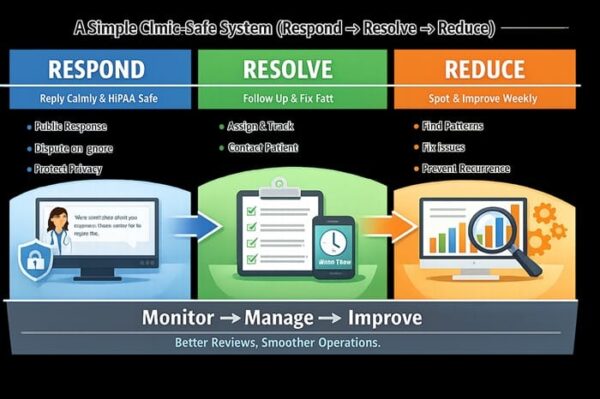
A simple clinic-safe system (Respond → Resolve → Reduce)
Respond → Resolve → Reduce Monitoring patient feedback is a simple way to manage reviews without improvising. Respond publicly with a calm, HIPAA-safe reply and the right action (respond, dispute, or ignore) to manage your doctor’s online reputation effectively and encourage patients to leave reviews. Resolve privately within one business day by assigning an owner and tracking follow-up to ensure a positive patient experience. Reduce Weekly by spotting patterns and fixing the operational lane—phones, scheduling, or billing—so the same complaints stop repeating, which can improve your positive online presence and enhance visibility in search results.
What we provide
Virtual Medical Administrative Assistant
Medical Virtual Receptionist
Remote Medical Scribe
Medical Billing Virtual Asssistant
Executive VA & Virtual Office Manager
Virtual Dental Administrative Assistant
Dental Virtual Receptionist
Remote Dental Scribe
Dental Billing Virtual Assistant
Virtual Dental Executive Assistant
Patient Care Coordinator
Prior-Authorization
Provider Support
Telehealth Specialist
Telephone Triage
Remote Patient Monitoring
The 2026 Compliance Playbook: What to Do Today
Build your “review request” policy (no gating, no games)
Standardize how your practice asks for positive reviews so no one improvises under pressure, which can shape better visibility in search results. Use one consistent process for every patient—same timing, same wording, same channel—and document it in a one-page policy your medical practice can follow to ensure patient trust and enhance your digital presence. This protects your clinic from accidental review gating, keeps your reputation strategy defensible, and enhances your doctor’s online reputation on platforms like Healthgrades. online review management for doctors is scalable as volume grows.
Create a dispute-ready documentation routine
When a review looks fake, competitor-driven, or clearly unrelated, don’t react emotionally—document first to protect your credibility. Screenshot the review, log the date/platform, note why it’s suspicious (wrong provider, impossible timeline, wrong location), and store it in your tracker to ensure thorough patient feedback management. That evidence makes disputes faster, cleaner, and more consistent, while your public response stays calm and privacy-first, enhancing your positive online presence and supporting your doctor’s online reputation.
What to Track Weekly (So Reviews Stop Surprising You)
Your 5-metric review dashboard
Keep review management operational, not emotional, to maintain a strong online reputation and build patient trust among today’s patients who rely on reviews across platforms like Google. Track five numbers weekly: total new reviews, % responded within 24–48 hours, top complaint category (access, wait time, phones, billing, staff), # resolved offline, and # disputed/removed to improve your digital presence. This turns the focus on proactive reputation management for doctors, ensuring that every review is addressed thoughtfully. online review management for doctors Transform your approach into a predictable workflow instead of a reactive scramble, which is vital for effective online reputation management for doctors and proactive engagement with patients online, allowing them to leave reviews.
Turn patterns into fixes (one lane per week)
Don’t try to fix everything at once; focus on improving patient feedback gradually. Pick the top recurring complaint and correct the lane behind it—add peak-hour phone coverage, tighten scheduling expectations, clarify billing scripts, or retrain front-desk language to enhance patient experience. Small weekly improvements compound, and potential patients notice the best practices faster than you think.

Medical Staff Relief perspective
Our journey started with Dr. Ricardo Abraham, an internal medicine physician who solved operational bottlenecks in his own clinic by building a consistent support lane—scripts, routing rules, and accountability. That same lane-based approach is how you make online review management for doctors safe, calm, and repeatable, fostering patient trust and encouraging them to leave reviews.
Quick FAQ
Respond to most negative reviews within 24–48 hours. Ignore only when engagement would amplify something low-value.
Yes—when there’s clear evidence it’s unrelated to your practice or violates policy. Otherwise respond calmly and move offline.
Yes—and it’s often better. Consistency, training, and templates beat personality.
Conclusion: Turn Reviews Into a System, Not a Stressor
In 2026, a strong online reputation will significantly impact healthcare providers who want to attract patients through search engine visibility and reading reviews. Online review management for doctors It isn’t about sounding perfect—it’s about running a repeatable, compliant system that protects credibility and reduces operational drag, enhancing your doctor’s online reputation through good reviews. When your team follows a clear Respond → Resolve → Reduce flow, reviews stop becoming a daily fire drill and start shaping a signal that potential patients can act on.
Medical Staff Relief helps practices install that system fast—templates, training, tracking, and a dedicated follow-up lane—so your staff stops improvising under pressure, patients feel heard, and your reputation reflects the care you actually deliver. Ready to experience the difference Medical Staff Relief can make for your practice’s patient experience and help grow your practice through good reviews that shape your online reputation?

Build your “review request” policy (no gating, no games)
Your 5-metric review dashboard